Book Review: Sophia’s War by Avi

Synopsis

Sophia’s War by Avi is a historical fiction novel set during the American Revolution, following the journey of a young girl caught in the midst of war, betrayal, and espionage.

Twelve-year-old Sophia Calderwood lives in British-occupied New York City in 1776. When her family is forced to house British officers, she witnesses firsthand the cruelty of war. Her loyalty to the Patriot cause strengthens when she witnesses the hanging of American soldier Nathan Hale. The most devastating moment comes when her beloved brother, William, a Patriot soldier, is captured and left to die in a British prison ship, deepening her hatred for the enemy.

Three years after her brother’s death and determined to aid the revolutionary cause, Sophia becomes a spy, working undercover as a maid in the home of the British officer John André. As she gathers intelligence, she uncovers a shocking plot: the infamous betrayal of West Point by the American general Benedict Arnold. Faced with a dangerous mission, Sophia must find the courage to expose the treason before it’s too late.

Avi masterfully blends historical accuracy with a gripping narrative, Sophia’s War highlights the role of ordinary individuals in shaping history.

Review

Like most of Avi’s novels, Sophia’s War is a well-crafted blend of historical accuracy, gripping storytelling, and vivid descriptions of Revolutionary War-era New York City. The novel follows Sophia Calderwood’s transformation from a naïve 12-year-old girl into a determined young patriot willing to risk everything for the cause of freedom.

At the start, Sophia is torn between her admiration for the charming British officer John André, whom her family is forced to lodge, and her devotion to her brother, a staunch Patriot who joins Washington’s army. When tragedy strikes and her brother dies in a British prison, the narrative jumps ahead three years, revealing a more mature and cunning 15-year-old Sophia. Now deeply committed to the revolution, she takes on the dangerous role of a spy, tasked with exposing Benedict Arnold’s treason.While Sophia’s inner conflict regarding John André adds depth to her character, her emotional journey in relation to him sometimes feels unconvincing, leaving aspects of the story less satisfying. However, Sophia’s War remains a compelling read, weaving fast-paced action with rich historical detail, making it an engaging and educational novel for readers of all ages.

  • Ages: 10 – 12 years
  • Awards: CBC Best Children’s Books of the Year (2013)
  • Pages: 302
  • Review: 4 out of 5 stars
  • Common Sense Media Review

Similar Books

Book Review: Team of Rivals: The Political Genius of Abraham Lincoln

I recently took a solo trip to Kansas from my home in South Dakota and so an audiobook was in high order. Being in the mood for some non-fiction about history, I found a book about Abraham Lincoln called Team of Rivals: The Political Genius of Abraham Lincoln.

I’ve long been an admirer of Lincoln and his leadership through perhaps the most harrowing time in U.S. history which began before he was even inaugurated as president. He was not a perfect man but he seems to have had a rare gifting of leadership that, upon reflecting on our current moment, we could certainly learn from.

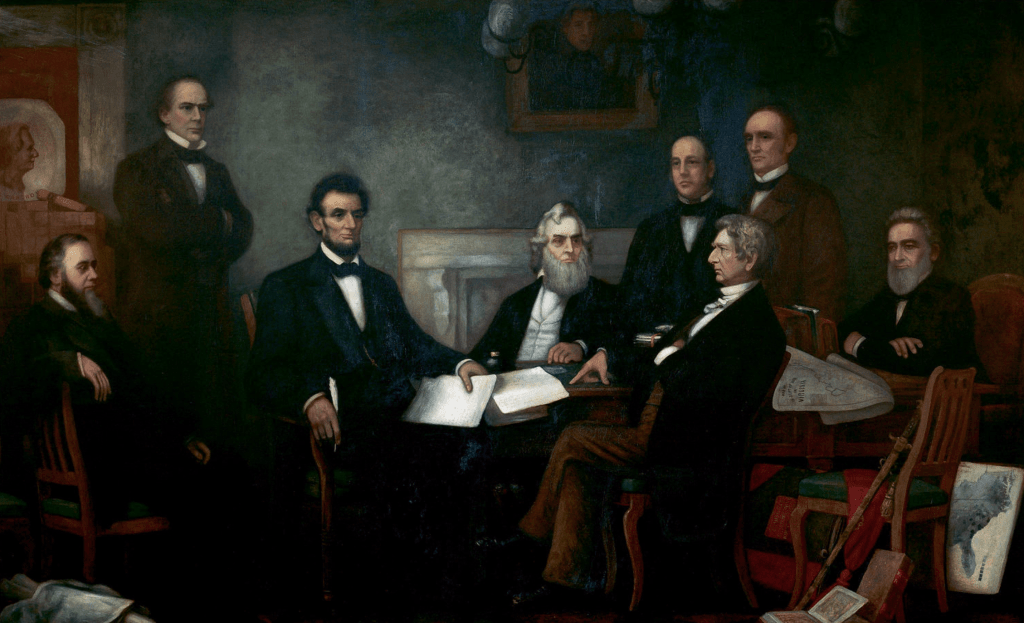
Team of Rivals, written by Doris Kearns Goodwin, focuses on Lincoln’s confounding and audacious move to appoint all three of his Republican presidential rivals to top posts in his cabinet. To run for president requires a rare combination and capacity, ambition and ego and while there are political reasons to appoint one’s rival to a cabinet position, something Lincoln understood only too well, it seems he appointed them for a far more important reason. Later, as the war raged on, he would appoint Edwin M. Stanton, one of his harshest public critics, to the post of Secretary of War. It seems that beyond the politics, Lincoln believed that in order to lead well, he would need to welcome and depend on the debate of ideas within his cabinet to ensure that he came to the very best decisions for the country.

Lincoln did not want yes men. He wanted the best men.

The book highlights as well the deft touch with which Lincoln was able to work with each of these men’s egos, finding their strengths and depending on them while earning their trust and admiration. William H. Seward was devastated by his 1860 loss to Lincoln but jumped at the chance to serve as Secretary of State, assuming wrongly that he would be able to guide other cabinet choices and lead the country with Lincoln as a sort of figurehead president. His disdain for Lincoln slowly but surly changed to deep admiration and respect and in the end he became one of Lincoln’s staunchest supporters even as he continued to offer fierce debate in all major decision – just as Lincoln wanted.

Of the others appointed to his cabinet, only Salmon P. Chase never came around to loyalty and respect for the president. He continued to harbor a deep sense of superiority as well as a deep ambition to be the Republican nominee in 1964. As another example of Lincoln’s tremendous leadership, he kept Chase in his position as Secretary of the Treasury, a position he excelled at, far longer than anyone else would have put up with the secretary’s shenanigans. He chose to endure the thorn in his side in order to capitalize on Chase’s unique skills with managing and finding ways to raise money for the Union cause. It was a fitting end to Chase when, in June of 1864, he sent Lincoln a letter of resignation over some perceived slight – something he’d done three times prior – with the smug confidence that Lincoln would beg him to stay. Lincoln, much to Chase’s surprise, did not respond but rather replaced him with a new Secretary of the Treasurer and allowed Chase to find out through the grapevine of gossip and news.

Goodwin does a masterful job of winding through the story of the primary and into those first heady days of the new cabinet, the new presidency and the new and terrible war. She writes with deep attention to historical detail, an insight into the character of Lincoln and these men and with a strong storytelling ability that makes this book intriguing, insightful and easy to read.

It is helpful to read history when wading through the turmoil of our current experience. The rancor, doomsaying and fear mongering of today’s politicians and pundits trying to convince us that democracy as we know it will end if their opponent wins, seems laughable in light of all that Lincoln faced in 1860. This book brings a kind of levity to our current partisan atmosphere but also gives us an example of what true leadership really looks like. We would all do well to read Team of Rivals: The Political Genius of Abraham Lincoln for it’s lessons on leadership and grounding in reality.

by Aaron G Myers

If you found this article helpful, share it with a friend.

(I originally posted this review at my other blog, Cobbled Together)

The Reading Life by C.S. Lewis

“We want to see with other eyes, to imagine with other imaginations, to feel with other hearts, as well as with our own.”  – C. S. Lewis

C.S. Lewis was said to be the best-read man of his generation, one who read everything and remembered everything he read. So begins David Downing and Michael Maudlin’s preface to The Reading Life: The Joy of Seeing New Worlds Through Others’ Eyes. This short collection of excerpts from C.S. Lewis’ lifetime of writings focuses on the joy and importance and need to develop the reading life. Extracted from books, essays and personal letters, these collected excerpts will take you into the mind of Lewis and his deep love of reading. 

Lewis was a man of academia, a professor of English literature who published academic papers and books but also wrote popular Christian non-fiction works like Mere Christianity alongside classic children’s literature like The Chronicles of Narnia. He read widely and saw reading as an integral part of his life, setting aside hours each day for reading and often reading for pleasure in the evenings. Reading was no mere hobby but an important tenet of his life and work.

This collection then is a wonderful introduction to Lewis in general and into his thoughts about reading specifically. His writing has often been praised for its clarity and beauty and you’ll find both in The Reading Life. More than that,  as you read you’ll find you are being pulled  into his love of reading, his insights into its importance and the journey of joy that is to be found in good books. The wardrobe will open into the deep, radiant thoughts of this man of genius and if you’re already a reader, your habit will be confirmed. If you’re an aspiring reader, those aspirations will be kindled. With each short chapter you’ll be imbued with a growing desire to turn off the television, put down your phone and sit for an hour or two with a good book.

by Aaron G Myers

If you found this post helpful, share it with a friend.

Thoughts On Reading

I’m not saying you have to let your children plant grass on their wall-to-wall carpeting, but I do think that if you want your children to have a joyous, easy relationship with books — and with learning in general — you have to tolerate a certain amount of disorder. You have to let your kids have some control over their environment — and that will probably mean piles of magazines here, lots of sporting equipment over there . . . . Just keep saying to yourself, in eighteen years they’ll go away to college.

Mary Leonhardt in ‘Parents Who Love Reading, Kids Who Don’t

image credit

Helping Parents: Navigating the Noise of the Billion Story World

Parents across the globe wrestle with the double edged world of smartphones and social media in the hands and pockets of their children. The opportunities for creativity, connection and content that catches the interests of kids are abundant. And yet the nagging feeling that something is awry sits uncomfortably in the back of our minds. The data coming out is disturbing. A mental health crisis is mushrooming before our eyes and the messages our kids hear and see on a daily basis are from every corner of the world – some good and many, just plain awful. Our kids are often exposed to ideas and images that are beyond their cognitive and emotional capacities. 

Where my childhood (I just turned 50) was shaped largely by the messages of my local community, a limited number of media outlets and whatever books I could procure at my local library, our kids are subject to a billion messages from a billion sources. My childhood was naturally curated. Our responsibility to our kids today then, is to help curate messages for them. We need not coddle them but we must guide them.

I’ve been thinking about these realities for a while now – both the good and the bad – and want to share a few ideas to help create a rich learning environment for our kids where we can avoid the dangers of a single story while protecting them from the seductive, slot machine of the billion story world that is ravaging kids and teens today.

Read: The Danger of a Single Story . . . and a Billion Stories Too

My first encouragement would be to pick up a copy of Andy Crouch’s important book, The Techwise Family and subscribe to Johnathan Haidt’s substack After Babel. They are two voices who are thinking deeply about the role of tech in our lives. These few ideas are mostly from their writings and conversations I’ve listened to in interviews.  

  1. Flip Phones Until High School: This is an idea that Haidt promotes that would do a lot to help kids pass through the already confusing and difficult junior high years without the need to also deal with the constant barage of messages from a smartphone connected constantly to the internet.
  2. No Social Media Until Sixteen: Again, Haidt suggests we protect our kids from the hazards of social media until they are a bit older and through the generally difficult junior high years.
  3. Regular Media Fasts:  Crouch suggests the idea that your family – parents included – fast from their phones one hour a day, one day a week and one week a year. Mom and Dad will need to lead on this one. One hour a day while you enjoy a family meal – sounds wonderful. One day a week. I turn off my phone most Saturday nights at 8:00 pm and turn it back on Sunday night at 8:00 pm. Pairing it with Sabbath rest has created far more rejuvenating Sundays. One week a year. Take a vacation and leave the phones at home. Sounds crazy and perhaps mom can bring hers for navigation and emergencies but imagine the freedom, the conversations in the car, the need to use our imaginations rather than just being mindlessly entertained at the first hint of boredom.
  4. Family Read Alouds: Find good books and don’t read to your kids, read with them. You have to want to read aloud each night as much as they do. You’ll know you’re doing well when the kids ask for one more chapter and you give in because you’re just as excited as them to see what happens next. I write this blog to share ideas for family read alouds. In the car, audiobooks can fill a road trip with the joy of a shared story and much to talk about.
  5. Be Model Readers: One of the clearest memories from my childhood was that my older brother went to bed every night with a book in his hand. Mom and dad too, read books often. Their model fostered a love in me of reading as well. For your kids sake, pick up a book and read.
  6. Curate Good Books: The books we chose to read to our kids and to help them read on their own will shape their worldview and form them as they grow into adulthood. It’s important then that we choose good literature. Books allow them to, as Attucus Finch tells Scout, “climb into another’s skin and walk around in it.” If we want our kids to grow in empathy and compassion, in their sense of justice and grace, in their view of a future marked by hope, then helping them read good books is an important task for any parent. And of course this includes movies as well.

These are just six simple ideas that I hope will be helpful. It will take intentionality. It may take the hard work of shifting the culture of how your home interacts with screens, smartphones and social media. We can lead our kids into a new way of interacting with devices and understand the reality that, as Dallas Willard points out, “The ultimate freedom we have as human beings is the power to select what we will allow or require our minds to dwell upon.”

Need a few youth fiction suggestions? Check out Our Top Ten Lists

image credit

Thoughts on Reading

Reading literature from the past is like a clean sea breeze blowing through our musty minds. There’s a refreshing sensation, in reading medieval writing with an open mind, of beginning to uncover things you’ve taken for granted about the world.

C. S. Lewis

link

Book Review: Adam of the Road by Elizabeth Janet Gray

Synopsis

Set in 13th Century England, eleven year old Adam, a harp playing son of a traveling minstrel, finds himself on the road to grand adventure. The story begins in the confines of St. Albans Abbey where Adam is staying and studying with his good friend Perkin and his lively red Spaniel Nick. He’s waiting for the return of his father from France, where he has been traveling as a knight’s minstrel. When his father, Roger, returns, Adam takes to the road, apprenticed to his father and the wandering life of a minstrel. Adam’s musical voice and growing grasp of both the harp and storytelling, make him an up and coming minstrel.  All is well until the night a rival minstrel steals Nick and in their hasty pursuit, Adam and Roger are separated. Adam’s story becomes a quest to find both dog and father and carries him across the English countryside and in and out of interesting and sometimes dangerous relationships. Following the breadcrumbs of reports of his father and of a red dog, Adam pursues with unshakable perseverance, a growing sense of himself and a fair amount of courage toward what he hopes will be their eventual reunification.

Review 

 Elizabeth Janet Gray’s Adam of the Road is a fun story that keeps readers on their toes with each turn of an English countryside corner. Adam is a relatable character, likable, brave and someone kids can look up to. He has a growing sense of himself making this a great coming of age story. The book has been praised for its “careful handling of history”.  It seems that Grey is a top notch researcher and brings the 13th century to light accurately. The pace of the story keeps it engaging and the general story telling of the author is great. Characters are well developed and the plot is fun. All in all Adam of the Road is a great story that young and old alike will enjoy.

Similar Books

By Aaron G. Myers

Book Review: The Breadwinner by Deborah Ellis

Synopsis

When the Taliban take over Afghanistan, eleven year old Parvana’s life is turned upside down. After leaving four homes because they’d been destroyed by bombs, she and her family find themselves living in one room of an apartment building not completely destroyed by bombs. Before the Taliban, Parvana’s mother wrote for a newspaper and her father was a school teacher, her bossy older sister was planning on going to university. Together they live with her younger sister and brother as their father tries to make a living selling trinkets and reading letters for the illiterate in the market. Parvana’s already desperate life gets worse when Taliban soldiers arrest her father over dinner one night because he was educated in England.  In order to survive in Taliban controlled Afghanistan where women are not allowed outside without a male escort, Parvana cuts her hair and becomes a boy in appearance. As Kaseem she is able to take up her father’s business and earn money. In the market she meets another girl from her class in school who has cut her hair. Together they work to find ways to earn more money. The rest of the story is filled with adventure, hardship, courage, more hardship and eventually, a plan to reunite the family.

Review 

 The Breadwinner is an inspiring story of courage, perseverance and hope. It is also devastating. With clarity and powerful storytelling, Deborah Ellis takes readers into the heart of Afghanistan under the Taliban in the late 90s. Written for young readers the book is accessible and well written and does a good job of giving a picture of the evil of the actions of the Taliban in a way that is relatable and not too much for nine and ten year olds. It is a great book for anyone looking to learn about another culture and a situation relevant to our current time. The Breadwinner helped me grow in compassion toward the people of Afghanistan, many of whom have come as refugees to North America and Europe in the past decade.

Similar Books

By Aaron G. Myers

Age: 10 – 99

A children’s story that can only be enjoyed by children is not a good children’s story in the slightest.

— C. S. Lewis

One of the great benefits of youth fiction is that, when written well, and so many are, any adult can pick a book up, read it and find deep joy in stories that are engaging and delightful. Yes, the characters are almost always ten, eleven and twelve year olds, but the stories often delve into the deep themes of life that touch the human heart. They are well told and leave behind the hubris and unnecessary sensuality of young adult fiction. They are a joy to read aloud to our children as child and adult alike can be drawn into the sometimes fantastical, sometimes heart wrenchingly realistic plots that unfold in so many of the books written for youth. 

I remember finding myself unable to continue a chapter near the end of Okay for Now that I had been reading aloud to my kids as I fought back tears. Other books have had me laughing out loud or raging with anger at injustice or simply smiling with joy at the kindness of a character. These books, written for young children, are often some of the best I’ve read. Yes, they can lack the depth of plot of the classics and the sentence structure is usually not as complex as adult fiction, but they are more often than not, just as good. 

This is the reason when we review books in this genre we always place the age as: 8, 10, or 12 – 99, though I suppose centenarians can enjoy them as well.

A good place to find these books – aside from our top ten lists – is the John Newbery Medal books. Each year since 1922 they have awarded one winner and any number of Newbery Honor awards to books in the children’s literature genre.  You can find the whole list of Newbery winners and honor books here: Newbery Medal

by Aaron G Myers

photo link